Fly Control Malaysia - House Flies, Fruit Flies & Drain Flies
Flies inside a property are more than a nuisance. They can contaminate food and surfaces, and their presence often points to a breeding source nearby that needs attention.
Why House Flies and Fruit Flies Keep Returning
House flies, fruit flies and drain flies each behave differently, but they all share one trait: they breed quickly in warm, humid conditions. In Malaysia, the steady heat and regular rainfall mean breeding sites stay active for much of the year, especially where organic waste, moisture or fermenting material collects.
In homes, a few fruit flies around the wet kitchen bin or a cluster of drain flies in a bathroom can multiply within days. For businesses that handle food, such as restaurants, hawker stalls, food factories and markets, flies are a direct threat to hygiene ratings and customer confidence. A visible fly problem can lead to failed audits, complaints or even temporary closure.
Most property owners contact us when they have tried spraying or swatting but the flies keep returning. That pattern usually means the breeding source has not been found or removed. Without addressing the source, any control effort is short-lived.
Signs That May Point to a Fly Issue
A few flies can appear for simple reasons, but some patterns suggest a deeper problem that is worth investigating.
Flies gathering in one area repeatedly
When house flies keep returning to the same corner of a kitchen or storeroom, it can indicate a hidden food source or a gap leading to a bin area outside.
Small flies hovering near drains or floor traps
Drain flies, also called moth flies, are fuzzy and weak fliers. Seeing them rest on walls near sink drains or floor gullies often points to organic sludge building up inside the pipe.
Fruit flies around ripening produce or bins
Fruit flies are drawn to fermenting fruit, vegetable peelings and sugary residues. A sudden increase in their numbers indoors usually means a piece of produce or a spill is being overlooked.
Clusters of dark speck marks on walls or ledges
House flies leave small faecal spots where they rest. Finding these specks above food prep surfaces, light fittings or window sills can suggest a regular roosting site nearby.
Grease trap or drain odour with fly activity
In commercial kitchens, a grease trap that smells strongly and has flies hovering above it is a common sign that the trap needs cleaning and the surrounding area needs attention.
- These signs can suggest a fly problem, but they do not confirm the species or the exact breeding site. An on-site assessment helps us identify the source and recommend practical steps.
What a Fly Control Visit Typically Covers
Depending on what the inspection finds, our work may include several of the following steps.
- 1
Breeding source inspection
We check bins, drains, grease traps, floor traps, compactors and any areas where organic waste or standing water collects. Identifying the source is the first step before any treatment is considered.
- 2
Sanitation and waste management advice
We point out cleaning gaps, bin placement issues and waste handling routines that may be contributing to the problem. Small changes to daily habits often make a large difference.
- 3
Fly light traps and monitoring
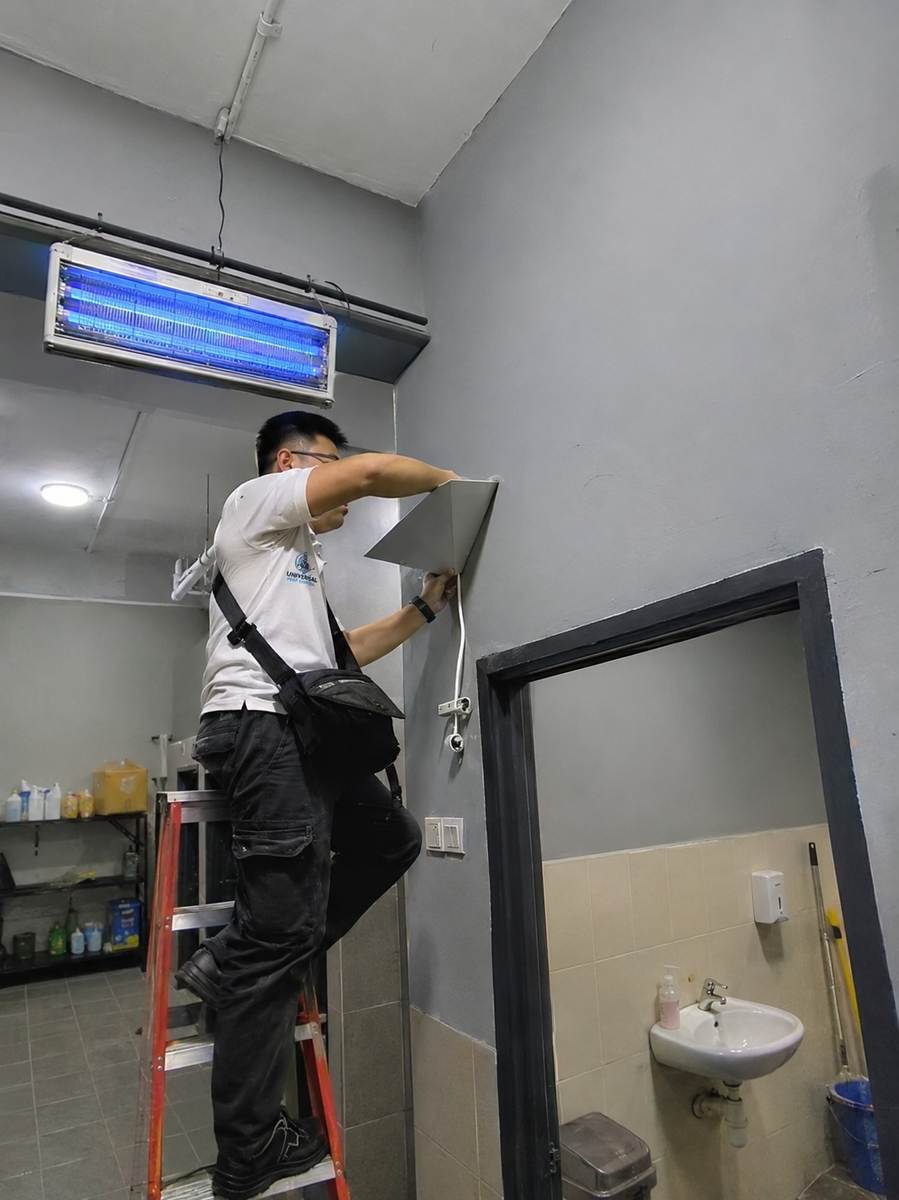
Where suitable, we may recommend or install insect light traps to capture adult flies and monitor activity. Trap placement is chosen carefully, especially in food premises where safety and compliance matter.
- 4
Proofing recommendations
We look at door gaps, window screens, air curtains and other entry points. Simple proofing measures can reduce the number of flies entering from outside while source reduction tackles the indoor population.
- 5
Targeted source treatment
Depending on the site and the pest, options may include treating drain interiors, applying a residual product to resting surfaces, or using a non-residual mist in enclosed spaces. The approach is decided after assessment.
Properties We Work With
Landed homes and terrace houses
Kitchens, bin storage areas and nearby drains are common hotspots. We help homeowners locate the source, often finding it in a covered drain or a compost pile that was overlooked.
Condominiums and apartments
Shared refuse chutes and compacted floor traps can spread fly problems between units. We focus on what can be controlled inside the unit and advise on common-area concerns where possible.
Restaurants, hawker stalls and food courts
Grease traps, wet waste bins and prep counters are under constant pressure. Our approach considers the rhythm of the kitchen, peak operating hours and the need to keep food areas protected during any treatment.
Food factories and markets
Large volumes of organic waste and high traffic create ideal conditions for flies. We look at waste holding areas, loading bays, drains and overhead structures where flies rest and breed.
Our Fly Control Process
- 1
Enquiry
You send us a WhatsApp message describing what you are seeing and, if helpful, a few photos of the affected areas. We ask a few questions to understand the property type and the scale of the problem.
- 2
Assessment
We visit the property to inspect likely breeding sites, check drains and traps, and identify the fly species involved. This step tells us whether the issue is mainly indoors, outdoors or both.
- 3
Quotation
We provide a quotation based on the size of the property, the number and type of breeding sites, the control methods that are suitable, and how many visits are likely needed.
- 4
Treatment
If you proceed, we carry out the agreed work. This may include source treatment, installing monitoring traps, and walking your team through the sanitation steps that will support the results.
- 5
Follow-up
We return to check breeding sites, review trap counts and see whether conditions have improved. Further visits are adjusted based on what we find.
The steps depend on the pest and the property. More on our process
What Affects a Fly Control Quotation
Every property is different, so we base the quotation on what the assessment uncovers. The main factors we consider are listed below.
- Size of the property and number of rooms or zones affected
- Number and type of breeding sites found (drains, grease traps, bins, compactors)
- Fly species present and the extent of the adult population
- Whether monitoring traps or insect light traps are needed
- Access to drains, ceiling voids or waste holding areas
- How many visits are likely required to bring the situation under control
- Any proofing work or structural recommendations that may be discussed
Safety During a Fly Control Visit
We take care to keep occupants, staff and pets away from any areas where a treatment is applied. Before the visit, we let you know which spaces will be involved so you can clear food, utensils and personal items from those surfaces. For homes, this often means securing the wet kitchen and bin areas. For food businesses, we work with your team to plan the visit around prep and service times so that food contact surfaces are protected.
If a treatment is applied inside a drain or a grease trap, we advise keeping the area closed off for a short period while the product settles. Any monitoring traps or insect light traps are positioned where they will not interfere with daily routines or food handling. We explain these precautions clearly before we begin, and we are happy to answer questions from kitchen supervisors or homeowners who want to understand each step.
Every site is different, so the preparation instructions we give are specific to your property and the methods we plan to use. Following those instructions carefully helps the treatment work as intended and keeps everyone safe during the process.
Fly Control FAQs
Why do flies keep coming back even after I clean regularly?
Can fly light traps solve the problem on their own?
How do I know if I have drain flies or fruit flies?
Will the treatment affect my restaurant's operations?
How many visits does it usually take to get flies under control?
What should I do before the team arrives?
Fly Control Area Coverage
Kuala Lumpur
Related Pest Control Services
Get a Fly Control Quote on WhatsApp
WhatsApp us to get a free quote. Tell us what you are seeing and where.