
Rat & Rodent Control Malaysia - Inspection, Baiting & Rodent Proofing
Rats and mice move through properties looking for food, water, and shelter. We help homeowners and businesses bring a rodent problem under control through careful inspection, practical treatment options, and monitoring that fits the site.
Why Rats and Mice Become a Problem
In Malaysia, the warm, humid climate and plentiful food sources allow rat and mouse populations to grow quickly. Common species like the roof rat and house mouse adapt well to built-up areas, moving between drains, back lanes, and the upper spaces of buildings. Once they find a reliable food supply and a quiet corner to nest, they tend to stay.
For homes, this often means scratching sounds in the ceiling at night, droppings in the kitchen cabinet, or a greasy smear along a skirting board. For businesses such as restaurants, food courts, and warehouses, a rodent sighting can damage stock, affect audit scores, and worry staff and customers. The problem usually starts small but becomes harder to ignore once breeding gets underway.
People contact us when they have tried keeping the place clean and blocking obvious gaps but the activity continues. Rodents are resourceful and can squeeze through openings much smaller than most people expect. An assessment helps pinpoint the species, the entry routes, and the conditions that are keeping them around, so the control work addresses the root of the issue rather than just the most visible signs.
Signs That May Point to a Rodent Problem
Rodents leave clues long before most people see an actual rat or mouse. These are some of the signs we look for during an assessment.
Droppings
Small, dark, pellet-shaped droppings along skirting boards, in cupboards, or near food storage. Rat droppings are larger and blunter; mouse droppings are smaller and pointed.
Gnaw marks
Parallel grooves on wood, plastic, cables, or food packaging. Rodents gnaw to keep their teeth sharp and to open access to food or nesting material.
Grease smears and rub marks
Dark, oily marks along walls, pipes, and beams where fur repeatedly brushes against a surface. These marks can build up over time along regular travel paths.
Scratching and scurrying sounds
Light scratching, scampering, or squeaking heard in the ceiling, wall cavities, or under the floor, especially at dusk or just before dawn when rodents are most active.
Burrows and nesting material
Shallow burrows in soft soil near drains or garden edges, or shredded paper, fabric, and dried plant matter gathered in a hidden corner. These suggest a nest site close by.
Ammonia-like smell
A stale, musky odour that becomes noticeable in enclosed spaces with poor ventilation. It tends to be stronger where urine and droppings have accumulated over time.
- One or two of these signs might be caused by something else, and the absence of a live sighting does not rule out a problem. An on-site assessment helps confirm whether rodents are present, which species is involved, and how extensive the activity is.
What Our Rodent Control Work Covers
Every site is different, so the exact approach depends on what the inspection finds. Broadly, the work can include several of the following elements.
- 1
Site inspection and species identification
We check the interior and exterior for signs of activity, entry points, food sources, and harbourage. Knowing whether you are dealing with rats or mice shapes the control strategy.
- 2
Monitoring and bait stations
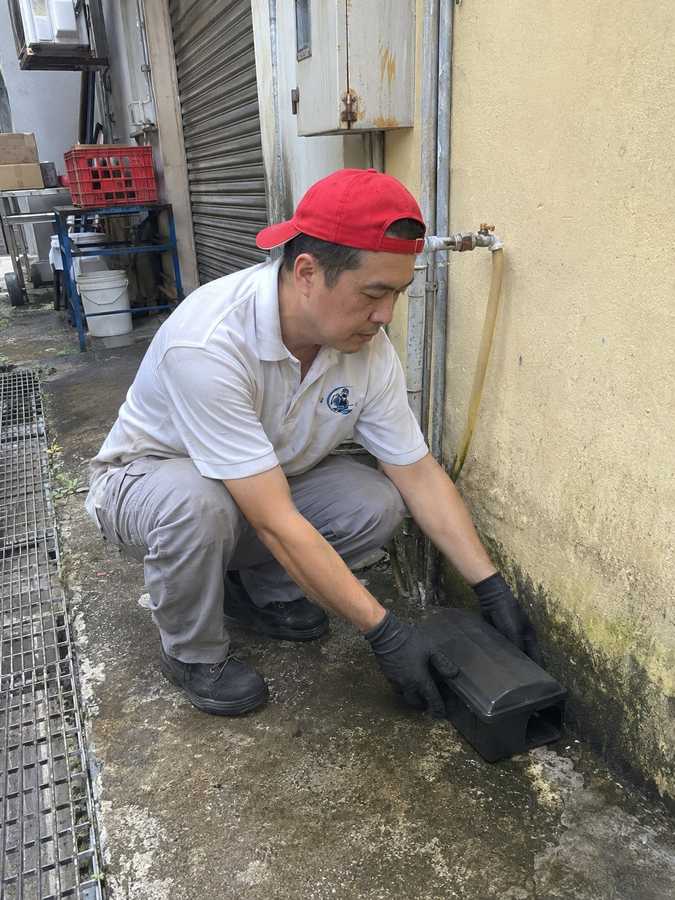
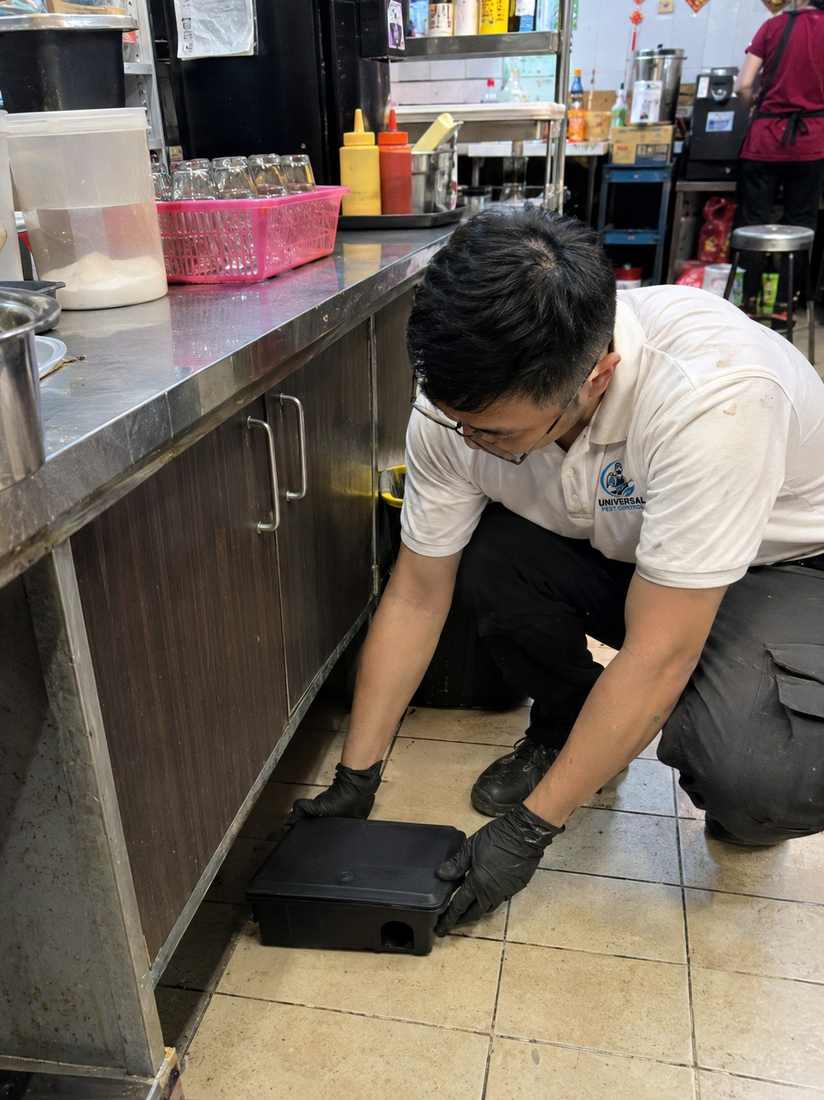
Depending on the layout and risk factors, we may place tamper-resistant bait stations in strategic positions. These are checked and replenished during follow-up visits to track activity levels.
- 3
Trapping in sensitive areas
Where bait is not suitable, such as inside a home with curious pets or near food preparation surfaces, mechanical traps can be used instead. Trap placement and type depend on the species and the location.
- 4
Exclusion and proofing advice
We point out gaps under doors, openings around pipe penetrations, broken air vents, and roof eave entry points. Closing these routes is a key part of reducing the chance of rodents returning.
- 5
Follow-up visits and monitoring
Rodent work rarely finishes in one visit. Follow-ups let us check bait uptake, refresh stations, remove any carcasses, and adjust the approach based on what the monitoring shows.
What You Can Do Between Visits
While the control programme is underway, a few simple steps on your side can help reduce food and shelter for rodents. Store dry foods in sealed glass or hard plastic containers rather than bags. Clear away pet food bowls overnight. Keep bin lids closed and take rubbish out regularly, especially from the wet kitchen.
Check for new gaps around pipes, door sweeps, and drain covers. Even a gap the width of a thumb can let a young rat through, and a pencil-width gap is enough for a mouse. If you spot fresh droppings or hear new sounds in the ceiling, send us a WhatsApp message so we can factor it into the next follow-up visit.
Rodent Control for Different Property Types
Landed homes and terrace houses
Rodents often enter through roof eaves, gaps around air-conditioner piping, or drains that connect to the back lane. Kitchens, store rooms, and false ceilings are common nesting spots.
Condominiums and apartments
Mice in particular can travel between units through shared ducts, pipe risers, and ceiling voids. A problem on one floor can sometimes affect neighbouring units, so early reporting helps.
Restaurants, kopitiams, and food courts
Food waste, grease traps, and dry goods storage attract rodents. Bait station placement needs to work around kitchen workflows, and proofing around bin areas and back-of-house doors is often a priority.
Warehouses and shophouses
Large, open spaces with stacked goods offer plenty of harbourage. Regular monitoring along perimeter walls, roller shutter gaps, and loading bays helps catch activity before stock is damaged.

Our Rat and Rodent Control Process
- 1
Enquiry
You send us a WhatsApp message describing what you have noticed. Photos of droppings, gnaw marks, or the area of concern help us prepare before the first visit.
- 2
Assessment
We visit the property to inspect inside and out, looking for entry points, food sources, harbourage, and signs that indicate the species and scale of activity.
- 3
Quotation
After the assessment we provide a quotation. The cost depends on the size of the property, the extent of the infestation, and the number of follow-up visits likely to be needed.
- 4
Treatment
We carry out the agreed control work, which may include placing bait stations, setting traps, and advising on proofing measures. The methods used depend on the site conditions and the risks present.
- 5
Follow-up
We return to check bait uptake, refresh stations, clear traps, and assess whether activity is declining. The follow-up schedule is adjusted based on what the monitoring shows over time.
The steps depend on the pest and the property. More on our process
What Affects the Quotation
We work out a quotation after seeing the property. The price depends on the specifics of the site and the rodent activity, not a fixed menu rate.
- Size and layout of the property
- Type of rodent (rats or mice) and extent of activity
- Number of bait stations or traps needed
- Accessibility of ceiling voids, roof spaces, and subfloor areas
- Number of follow-up visits required
- Complexity of proofing recommendations
- Commercial vs residential setting and operational hours
- Distance and travel requirements
Safety During Rodent Control Work
Rodent control involves materials and methods that need careful handling. Before each visit, we give clear preparation instructions so that occupants know what to expect and how to keep children, pets, and food preparation areas separated from the work zones. The instructions are specific to the job, not a generic checklist.
Bait stations used on site are designed to be tamper-resistant. Where the risk of a child or pet reaching a station cannot be ruled out, we discuss alternative approaches such as mechanical traps placed inside locked or inaccessible areas. In kitchens and food storage rooms, we take extra care to position any control measures well away from food contact surfaces and open ingredients.
We also advise occupants to avoid handling droppings, nesting material, or dead rodents without proper protection. Diseases such as leptospirosis are associated with rat urine, and disturbing dried droppings can release particles into the air. If a carcass is found in an awkward spot, we can arrange to remove it during a scheduled visit rather than have someone attempt it themselves.
Rat and Rodent Control FAQs
Further reading
How do I know if I have rats or mice?
Why do I hear scratching in the ceiling but never see a rodent?
Will bait stations make rats die inside the ceiling?
How long does rodent control take?
Can I clean up the droppings myself?
What should a restaurant or food business do after a rodent sighting?
Rat & Rodent Control Area Coverage
Kuala Lumpur
Related Pest Control Services
Get a Rodent Control Quote on WhatsApp
WhatsApp us to get a free quote. We will take a look and put together a quotation for your property.