
Termite Control Malaysia - Inspection & Anti-Termite Treatment
Subterranean termites can weaken structural timber long before you notice them. Our team assesses the extent of activity and suggests treatment approaches suited to your property.
Why Subterranean Termites Threaten Malaysian Properties
Subterranean termites live in underground colonies and travel through soil to reach wood. In Malaysian homes and businesses, they often feed on door frames, skirting boards, parquet flooring, built-in cabinets and roof timbers. Because they stay hidden inside timber or inside their mud tubes, the damage can spread for months without any obvious sign.
The warm, humid climate and frequent monsoon rains create conditions where termites thrive. Terrace houses, semi-detached homes, bungalows and shophouses are all at risk, especially where there is direct soil contact with the building or where moisture collects near the foundation. Once termites find a food source, they can keep returning from the same colony.
People usually ask for help when they see mud trails on walls, find hollow-sounding skirting or discover damaged wood during a renovation. By that stage, the colony has often been active for some time. The priority is to understand where the termites are feeding, how they are entering the property, and what treatment approach fits the situation.
Common Signs of Termite Damage to Look For
These are some of the signs we look for during an inspection, though only a close assessment can confirm an active infestation.
Mud tubes on walls or foundations
Subterranean termites build narrow mud tunnels to travel between the soil and their food source. You may see them running along concrete walls, columns, or inside cupboards.
Hollow-sounding timber
When termites eat wood from the inside, they leave a thin outer shell. Tapping on door frames, skirting boards or parquet may produce a hollow sound.
Discarded wings after swarming
Winged termites emerge in large numbers, usually after rain, to start new colonies. Finding piles of shed wings near windows or light sources can point to a nearby nest.
Damaged or crumbling wood
Door frames that crack easily, skirting that flakes away, or built-in cabinets that feel soft to the touch may all indicate termite feeding over time.
Roof timber with mud deposits
Termites can reach roof structures through internal wall voids. Mud smears or small tunnels on ceiling beams and trusses are a sign worth checking.
- These signs suggest termite activity, but they are not always easy to spot on your own. An inspection helps confirm whether the problem is active and how far it has spread.
What Our Termite Control Service Covers
Every job starts with an inspection, and what follows depends on what we find.
- 1
On-site inspection and assessment
We check accessible areas inside and outside the property, looking for live termites, mud tubes, damaged wood and moisture sources. The findings shape the treatment recommendation.
- 2
Treatment approach based on the property
Depending on the construction type and where termites are active, options may include a soil-applied barrier, a baiting programme, or a combination of both. We explain the differences before any work begins.
- 3
Monitoring and follow-up visits
After treatment, we return to check whether termite activity has declined. For baiting programmes, monitoring stations are checked periodically. Follow-up visits help us spot new activity early.
- 4
Practical advice on reducing moisture and soil contact
We point out conditions that attract termites, such as wood-to-soil contact, leaking pipes or poor drainage. Small changes can make the property less inviting to termites.
Termite Baiting and Soil Treatment Approaches
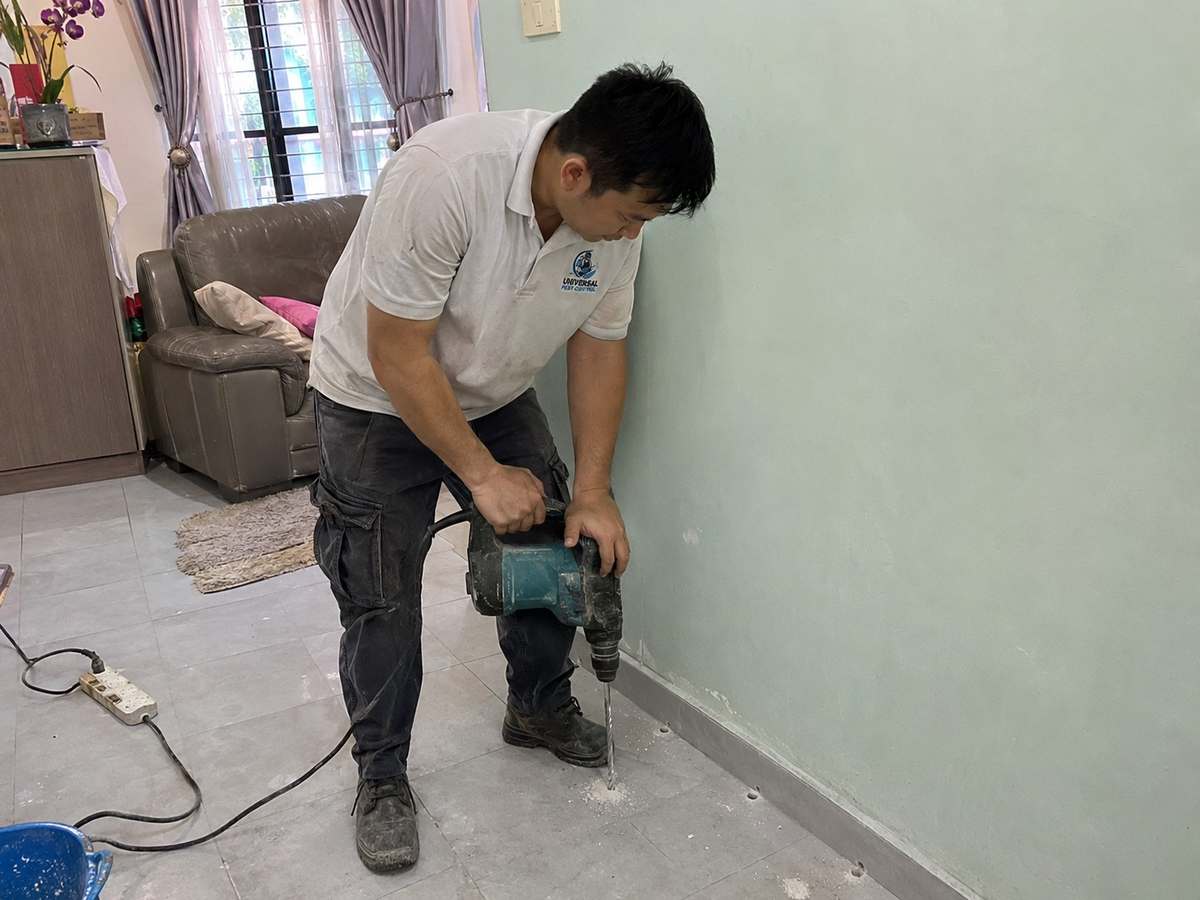
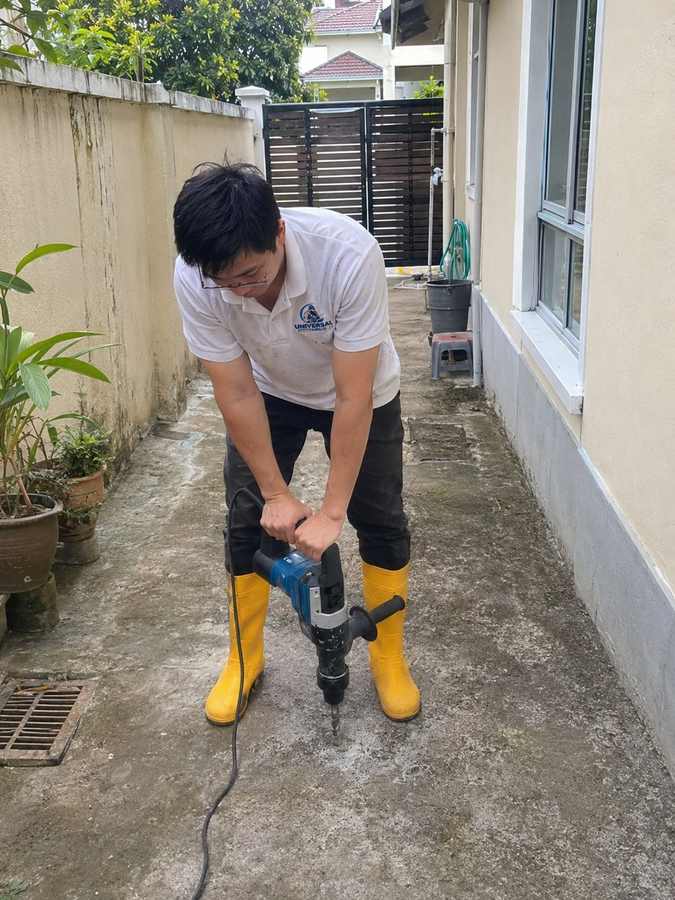
A soil-applied barrier creates a treated zone in the ground around the building perimeter. The aim is to intercept termites as they travel between their colony in the soil and the timber inside the property. This approach is often used for landed homes where the foundation is accessible and the termite entry points can be identified. Depending on the construction, the barrier may be applied by trenching and treating the soil along external walls, drilling into concrete slabs, or both.
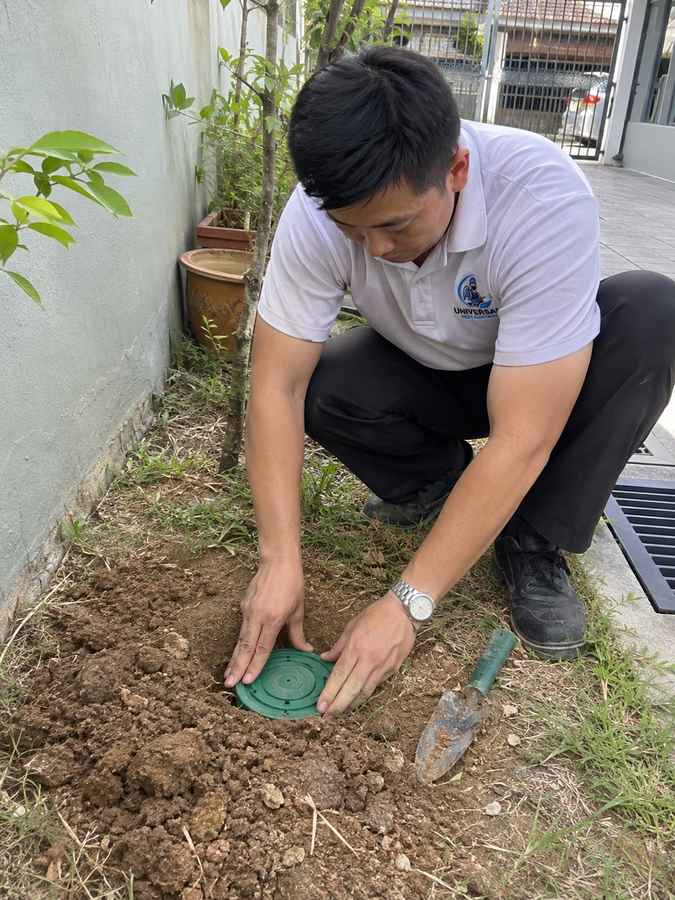
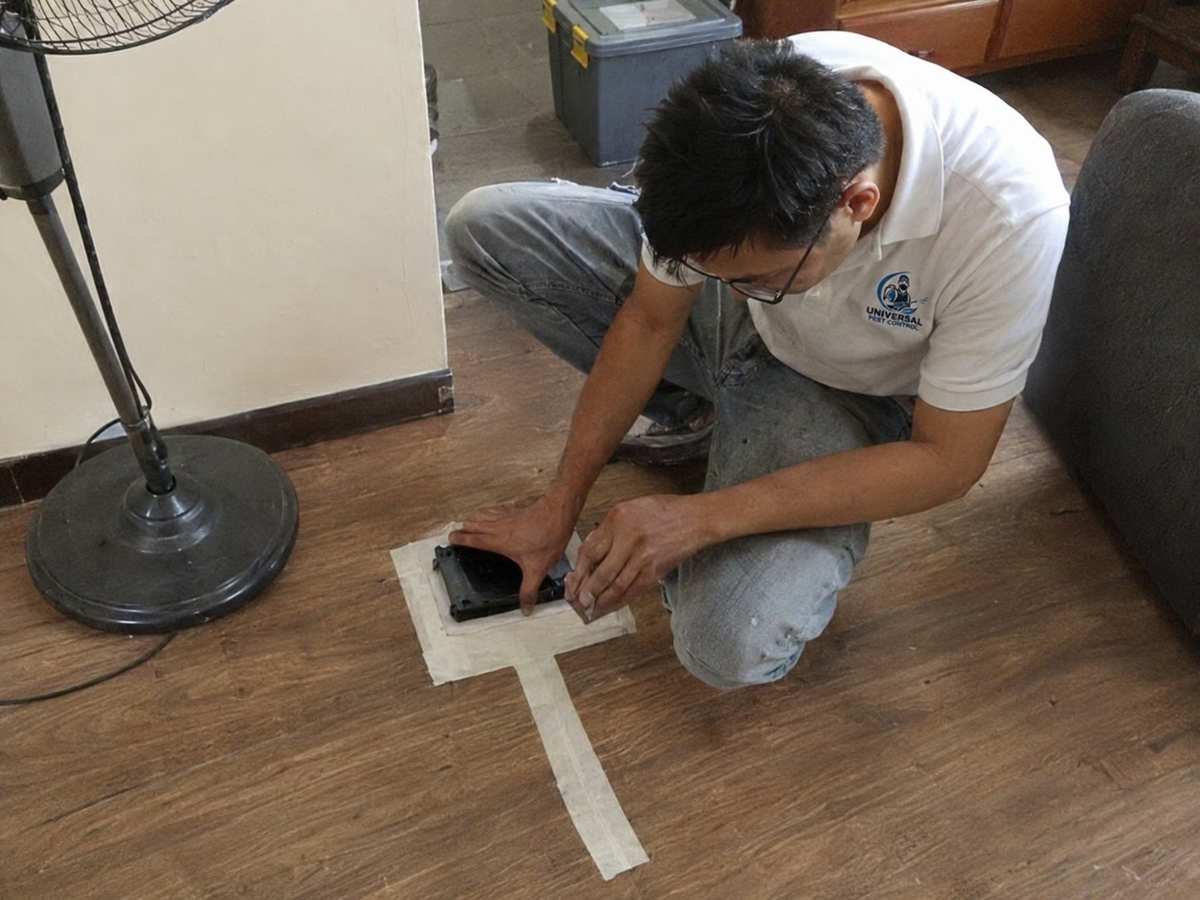
A baiting programme works differently. Bait stations are placed in the ground around the property or directly in the path of active termites. Termites feed on the bait and carry it back to the colony. Over time, this reduces the colony itself. Baiting requires regular monitoring and replenishment, so follow-up visits are an important part of the programme. It can be a suitable option when a soil barrier is difficult to install or when the colony location is not obvious.
Sometimes a combination of both approaches is recommended. For example, a soil barrier may be used to protect the building perimeter while bait stations target a specific colony that is already feeding inside. The choice depends on what the inspection finds: the type of construction, where the termites are active, and the level of risk to the property. We explain the reasoning behind each option so you can make an informed decision.
Properties We Treat for Termites
Landed homes
Terrace houses, semi-detached homes and bungalows often have direct soil contact around the perimeter, which is the main entry route for subterranean termites. We check both the interior and the surrounding ground.
Condominiums and apartments
Even units on higher floors can have termite activity if there is dampness, leaking pipes, or timber that connects to the building structure. We look for mud tubes in cupboards, behind cabinets and along plumbing penetrations.
Shophouses and commercial units
Older shophouses with timber beams, mezzanine floors and shared walls are particularly vulnerable. Restaurants, food courts and warehouses also need regular checks because termites can damage stock, shelving and structural wood.
Factories and warehouses
Large roof spans, stored timber pallets and hidden corners make factories attractive to termites. We focus on structural timbers, storage areas and any point where soil meets the building.
Our Termite Control Process
- 1
Enquiry
Send us a WhatsApp message with photos of what you have noticed, such as mud tubes, damaged wood or discarded wings. We ask a few questions about your property and the signs you are seeing.
- 2
Assessment
We visit the property to inspect accessible areas. This includes checking door frames, skirting, built-in cabinets, roof timbers and the surrounding ground where possible.
- 3
Quotation
After the assessment, we explain what we found and suggest a treatment approach. The quotation depends on the size of the property, the extent of activity and the method recommended.
- 4
Treatment
We carry out the agreed work, which may involve installing bait stations, applying a soil barrier, or both. Preparation instructions are given beforehand so the site is ready.
- 5
Follow-up
We return to monitor the results and check for any new activity. For ongoing programmes, we schedule follow-up visits to inspect monitoring stations and re-treat if needed.
The steps depend on the pest and the property. More on our process
What Affects Your Anti-Termite Treatment Quotation
Every property is different, so the quotation is based on what the inspection reveals and the work needed.
- The size of the property and the area that needs treatment
- Whether termite activity is localised or spread across multiple areas
- The type of construction and ease of access to infested timber
- Whether the treatment is a soil barrier, a baiting programme, or a combination
- The number of follow-up visits needed to monitor the situation
- Any preparation work required before treatment can begin
- Whether the job is for an existing infestation or a preventive anti-termite treatment
Safety During Termite Treatment
We give clear preparation instructions before the scheduled treatment so you know what to do and what to expect. This includes guidance on clearing access to affected areas, covering food items and keeping occupants and pets away from the work zone during the process. The exact instructions depend on the treatment method being used.
For homes with children, elderly residents or pets, we take extra care to ensure the work area is properly prepared and cordoned off. In commercial settings such as restaurants, food courts and food processing areas, we pay close attention to food storage, preparation surfaces and equipment. All precautions are discussed with you ahead of time.
Our team carries out every job with a focus on keeping your household or workplace safe. We explain what we are doing at each stage and answer any questions you have about the process. If you have particular concerns, let us know when we are planning the visit so we can address them properly.
Termite Control FAQs
Should I spray the termites or break the mud tubes before you arrive?
How do I know if the termites are still active or if the damage is old?
Can termites come back after treatment?
What is the difference between termite control and an anti-termite treatment?
Do you treat termites in condominiums and high-rise units?
How long does a termite treatment take to work?
Termite Control Area Coverage
Kuala Lumpur
Related Pest Control Services
Get a Termite Control Quote on WhatsApp
WhatsApp us to get a free quote. We will put together a quotation based on what we see and the layout of your property.